
Exporting searched files
You can export a batch of files and share it with the concerned authority for the intended use. To secure the information, you can use the AES-256 encryption while creating a batch of files for export. After exporting the batch of files, you can download and share it with others.
To export a batch of files:
-
On the Investigations tab, create a new search or select the searches from the On-going searches or Standard searches node.
-
Perform advanced search or query search to get the expected items. See Performing Advanced Search and Query Search.The application displays result.
-
On the Files tab, select the check box for one or more files, and click Export. Do any of the following:
-
Click Export selected files to export only the selected files.
-
Click Export all files to export all the available files within the search.
-
-
In the Export Options dialog box, specify the following:
Message Format Select the appropriate message format for batch export. Options include\: - JSON Note: This format is selected by default. When you select JSON format for export, files are downloaded in their original form, and not as JSON. - EDRM Only Enable AES-256 Encryption Select this check-box if you want to secure the access of the downloaded export batch. Export Name Provide the name for the batch you want to export. By default, it takes the Search Name. You can change it if required. Export Password Enter the password that you want end user to provide when they access this exported batch of files. Confirm Password Repeat the same password for confirmation. Generate Azure SAS URL Note: Users can see this button only if the Export to Azure private storage location feature in the Arctera Management Console is enabled for them. Users can export items to their private Azure Blob storage location. Click Generate Azure SAS URL to get the Azure Blob SAS URL to access the location and save it for future use. For security reasons, the application does not show this URL the next time. However, if the SAS URL is misplaced for any reason, click Generate Azure SAS URL again to generate a new SAS URL and save it securely. After you click Export on the Export Options dialog box, all the selected items are exported to the Azure private storage location. You can use Microsoft Storage Explorer to access the exported items. Share Export Click Select Admin to choose the recipients of this batch export and click Update. Note: You need to manually share the Export Password with the administrators and follow all the security specific rules of the organization. -
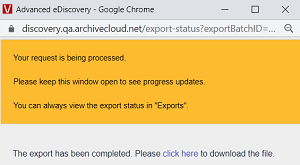
Click Export.Note: The exported batch can either gets downloaded as a single or multiple file segments.
-
Click Click here to download the exported batch of files.
-
To confirm the status of batch export, on the Investigations tab, select Exports. The application displays status of performed exports.
Related information